
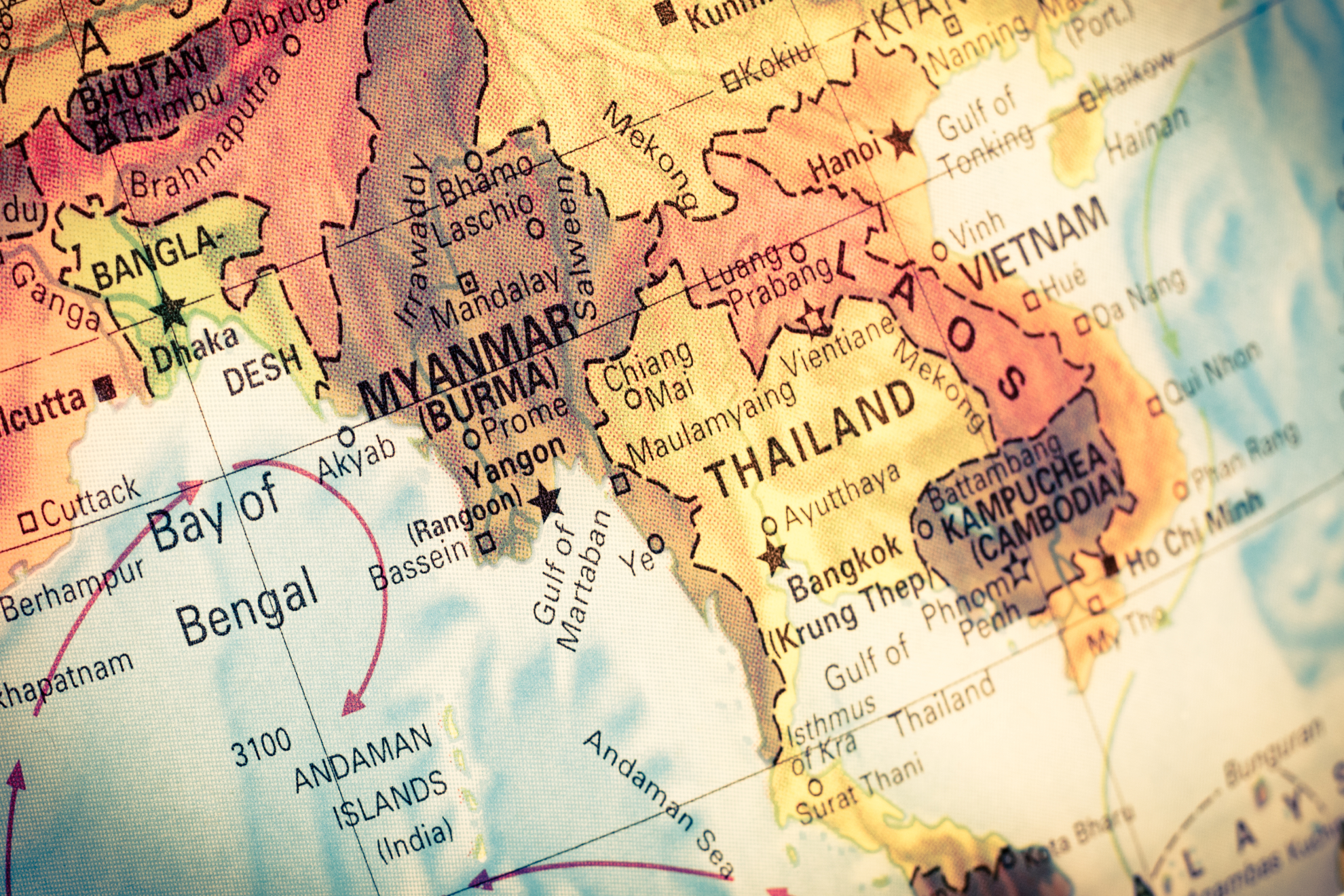
Hakha Chin is widely used in Chin State, Myanmar, but it is only one of many languages spoken across the region. Although these languages are related, differences in vocabulary, pronunciation, and usage mean speakers do not always understand one another.
This is where the term “Chin” can cause confusion. It refers to a group of related languages rather than a single language.
This guide looks at where Hakha Chin fits within that group, how it compares with languages such as Falam, Tedim, and Mizo, and why identifying the right language matters when communicating with Chin speakers.
What Is Hakha Chin?

Hakha Chin, also called Hakha Lai or Laiholh, is a Chin language spoken primarily in Myanmar, with speakers also found in India and Bangladesh. It belongs to the South Central branch of the Tibeto-Burman language family.
The Chin Languages Research Project identifies Hakha Lai as one of the many distinct languages within this group.
Hakha Chin has its own ISO 639-3 language code, cnh, which distinguishes it from other Chin languages.
Glottolog also lists Hakha Chin as a separate language and records names including Hakha Chin, Hakha Lai, Lai, and Laiholh.
Speaker estimates vary by source, particularly because Hakha Chin is also spoken by diaspora communities outside Myanmar.
Is Hakha Chin a Language or a Dialect?
Hakha Chin is a language in its own right. It has its own international language code, its own written standard and its own literature.
“Chin” is the name of a people and a group of languages, not a single language.
Some confusion comes from the fact that Hakha Chin has dialects of its own. Speech varies from village to village, and varieties such as Zokhua and Thantlang Lai are treated as dialects of Hakha Chin. So Hakha Chin is a language with its own dialects, inside a larger family of languages.
The Chin Language Family at a Glance
Chin languages are closely related, but they are not all equally similar. Some belong to the same branch and share more features, while others are more distant within the wider language family.
You do not need to know every branch to understand the main distinction. Hakha Chin belongs to the Central group, alongside languages such as Falam and Mizo. Tedim, by comparison, belongs to a different branch.
This helps explain why some Chin languages may sound or look more similar to Hakha Chin than others, even though each remains a distinct language.
What Makes Hakha Chin Different?

Chin languages come from a common ancestor, so they have a lot in common. The differences show up in how each language is used, what it is called, which words it uses, how it sounds and how it is written. Here are seven ways Hakha Chin stands apart.
1. It Is the Common Language of Chin State
Hakha Chin works as a lingua franca, or shared language, across much of Chin State. The reason is practical. Hakha is the state capital, and many speakers of other Chin languages learn Hakha Chin as their second language.
Government jobs and business in Hakha draw people from other parts of the state. Their families pick up the language over time. The same pattern continues abroad. Research led by Dr. Kelly Berkson of Indiana University found that Hakha Lai is the most widely spoken Chin language in Indianapolis, a city with a large Chin community.
2. It Goes by Many Names
Hakha Chin has several names, which can confuse people outside the community. You may see it called Hakha Lai, Laiholh, Lai, Haka or Haka Chin. In Mizoram, India, it is often called Pawi or Lai Pawi.
The name “Lai” causes extra confusion, because Falam Chin is also known as Lai. Hakha Chin also has no link to Hakka, a Chinese language with a similar-sounding name. “Hakha” refers to the town in Chin State and its language. “Hakka” refers to Chinese people and their language.
3. Its Words Often Differ From Other Chin Languages
Related languages often share grammar but use different words. The Chin Languages Research Project gives a clear example using the question “Didn’t the dogs chase you?” The word for “chase” is dawi in Hakha Lai, cade in Lutuv (Lautu) and deng in Zophei.
All three sentences end with the same question word, ma, which shows the family connection. Still, the core vocabulary differs enough that a listener who knows only one of these languages may struggle with the others.
4. Its Sounds and Tones
Hakha Chin is a tonal language, so the pitch of a word can change its meaning. Most words are a single syllable.
Linguists Larry Hyman and Kenneth VanBik, a native speaker of Hakha Lai, have shown that tones in Hakha Lai change depending on the words around them.
The language also has sounds that English speakers rarely hear. These include voiceless versions of sounds like l, m and n, written with an h in front: hl, hm and hn.
Sound changes also differ by branch. In the Central branch, older kr, pr, kl and pl sounds shifted to tr and tl, which is why these spellings are common in Hakha Chin.
Languages in the Maraic branch, such as Mara, went a different way and lost many final consonants. Kenneth VanBik’s study of the family’s shared ancestor describes Hakha Lai as one of the most conservative Chin languages, meaning it has kept many older features.
5. Shared Grammar, With Its Own Details
Grammar is where Chin languages look most alike. Hakha Chin follows subject-object-verb order, so the verb comes at the end of the sentence, and negation comes after the verb. Most verbs have two forms, often called Form I and Form II, used in different kinds of sentences.
These features are not unique to Hakha Chin. Tedim Chin also has two verb stems and the same word order. The takeaway for readers is simple. Similar grammar does not make the languages interchangeable when the words and sounds are different.
6. Its Writing System and Written Tradition
Hakha Chin is written in the Latin alphabet. Written forms date back to 1891, and missionaries Arthur Carson and Harry Tilbe produced a version in 1900. Herbert Cope created another in 1908.
The Bible was translated into Hakha Chin between 1978 and 1999, and online dictionaries with audio are available today. By comparison, a written script for Falam was created in 1924. Tedim speakers also have the historic Pau Cin Hau script, named after the religious leader who created it.
7. Its Place in Schools at Home and Abroad
In early 2020, the Chin State parliament approved five Chin languages for government schools: Laizo, Lai, Zo, Cho and Khumi. Lai, the Hakha Chin language, was set to be taught in townships that include Hakha and Thantlang.
Hakha Chin is also taught outside Myanmar. In Victoria, Australia, Chin Hakha is an official subject in the Victorian Certificate of Education, with its own study design and final exams.
Hakha Chin vs. Falam Chin
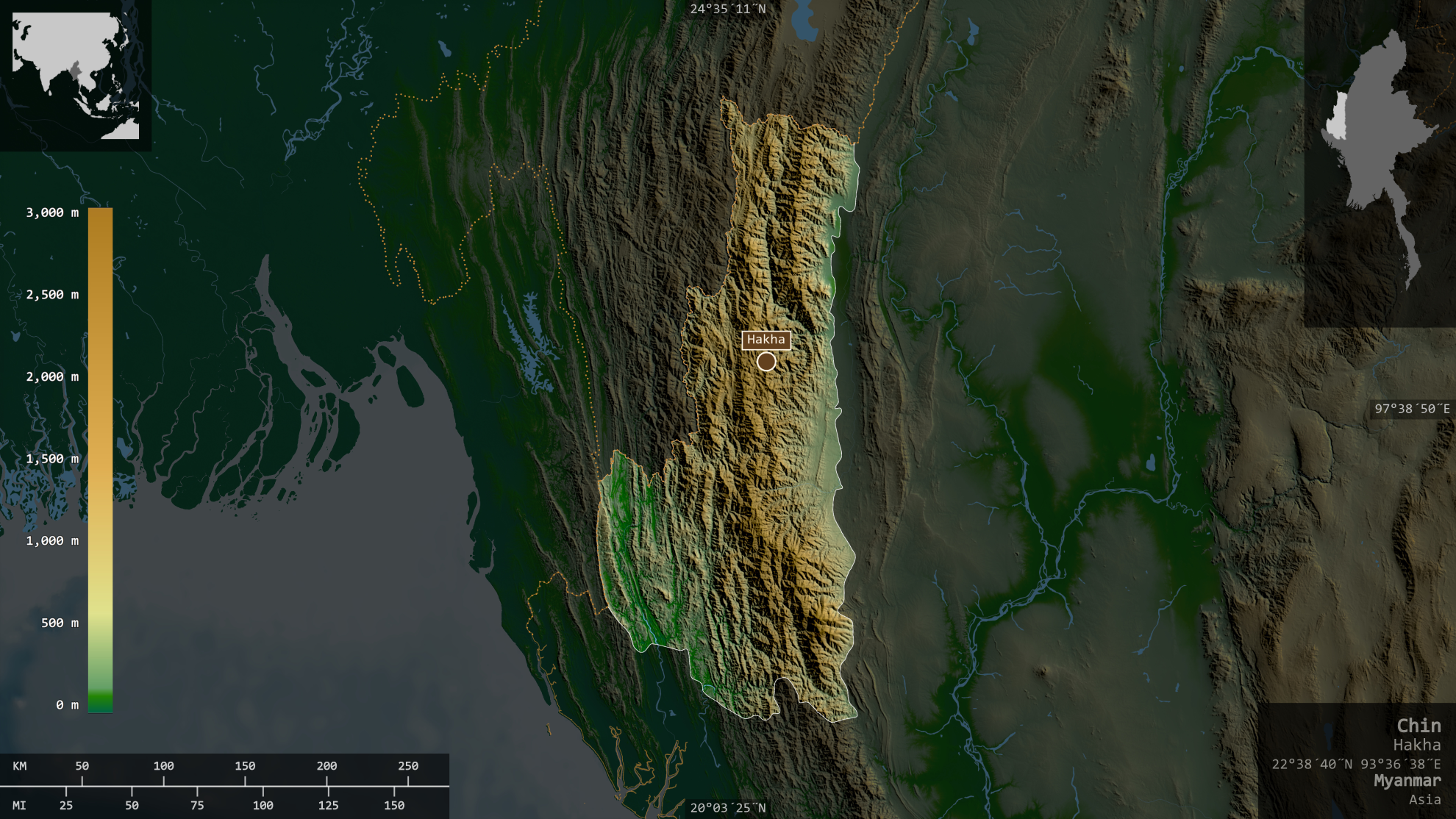
Falam Chin is the closest major relative of Hakha Chin. Both belong to the Lai group of Central Chin languages, spoken by the Lai people. Falam is closely related to most Central Chin languages, especially Hakha Chin.
Even so, the two have separate identities. Falam has its own written standard and its own Bible translation. It also grew out of several local varieties, including Laizo, Zahau, Tlaisun and Sim, which gives it a different history from Hakha Chin.
For anyone working with the community, the lesson is clear. Close relatives still speak different languages. A Falam speaker may understand some Hakha Chin, but may prefer Falam for a medical visit, a legal matter or any conversation where details count.
| Feature | Hakha Chin | Falam Chin |
| Branch | Central Chin | Central Chin |
| Main area | Hakha, Thantlang | Falam |
| Alternative names | Laiholh, Hakha Lai | Laizo, Lai |
| Same language | No | No |
How Hakha Chin Compares With Tedim Chin and Mizo
Tedim and Mizo are two other large languages that people often group with Hakha Chin. They sit in different places on the family tree.
Tedim Chin, also called Zo or Zopau, belongs to the Northern branch. It is the language of the Tedim people, part of the wider Zomi community. Its closest partner is Paite, which Tedim speakers can understand. Hakha Chin sits in a different branch altogether.
Mizo belongs to the same Central branch as Hakha Chin. It is the main language of Mizoram, India, where some Hakha Chin speakers also live in districts such as Lawngtlai.
| Language | Branch | Main area | Relationship to Hakha Chin |
| Hakha Chin | Central | Hakha and Thantlang | — |
| Falam Chin | Central | Falam | Closely related but distinct |
| Tedim Chin | Northern | Tedim | More distantly related |
| Mizo | Central | Mizoram | Related Central language |
Why These Differences Matter for Chin Communities in the U.S.
Many Chin families have resettled in the United States, and Indianapolis, Indiana is home to a large community. More than 20,000 speakers of Chin languages live there, and researchers estimate that upwards of 30 Chin languages are spoken in the city.
Most Chin people speak more than one language. A 2024 survey by the Chin Languages Research Project found that the average Chin person in Indianapolis speaks three languages, and some speak as many as 15.
For schools, clinics, employers and public offices, this has a practical meaning. Do not assume that “Chin” or Burmese will work for everyone. Ask which language a person speaks, and which one they prefer for important conversations. A Hakha Chin speaker, a Falam speaker and a Tedim speaker may each need something different.
Conclusion
Hakha Chin is distinct from other Chin languages in its vocabulary, pronunciation, written tradition, and everyday use. For organizations working with Chin communities, identifying the exact language matters because Hakha Chin, Falam, Tedim, and other Chin languages are not interchangeable.
Get Hakha Chin Language Support From Capital Linguists
Capital Linguists provides professional Hakha Chin interpretation and translation services, along with translation and interpretation support in more than 200 languages.
Share your language needs, service type, format, and timeline. We’ll help connect you with the right language professional for your situation.

