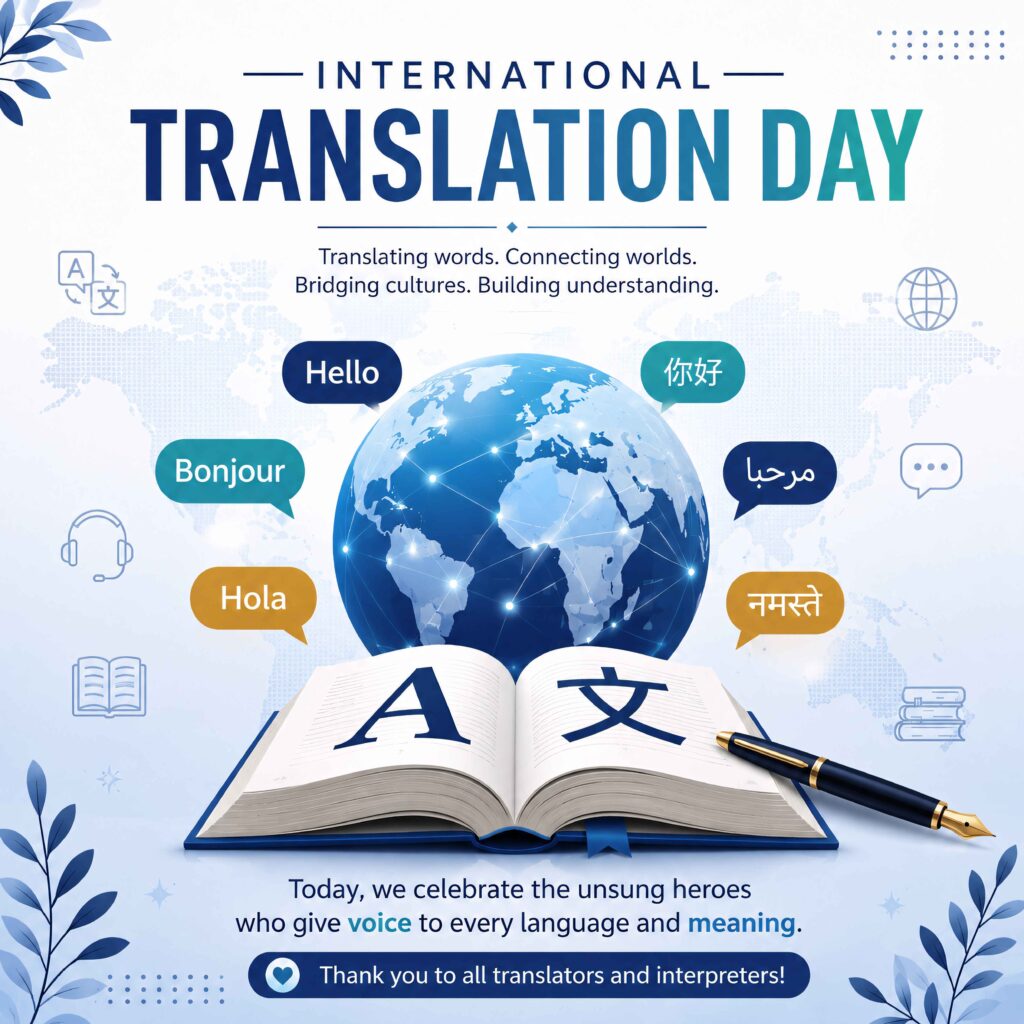
The theme of International Translation Day 2026 is “Linguistic Diversity and Language Rights,” with the subtitle “The power of being understood.” The International Federation of Translators (FIT) set the theme, and the day falls on Wednesday, 30 September 2026.
Each year, this day honours the translators, interpreters and terminologists who help people communicate across languages. This year’s message is simple. Being heard is one thing. Being understood is what counts.
What Does the 2026 Theme Mean?
Language rights are about access. They include the right to get information, justice, education, healthcare and public services in a language you understand. They also protect your right to keep and pass on your own language and culture.
A right on paper does little by itself, though. A patient needs to understand a diagnosis. A family needs to understand an immigration notice. A person in court needs to follow what is being said about them.
This is where translation comes in. As FIT states on its International Translation Day 2026 page, “Language rights are effectively realised through translation.” Professional linguists turn legal promises into real access.
Why Is International Translation Day on 30 September?
The date marks the feast of St. Jerome, who translated most of the Bible into Latin and is seen as the patron saint of translators. FIT promoted the day for years before the United Nations gave it official status. In May 2017, the UN General Assembly adopted resolution 71/288, which declared 30 September as International Translation Day.
For 2026, FIT is hosting a free online webinar on the theme. It runs on 29 September at 2 pm Paris time, with speakers from universities, Translation Commons and the World Intellectual Property Organization.
How Translation and Interpreting Support Language Rights
Translation and interpreting do different jobs, and language rights need both. Translation works with written text. Interpreting works with speech, in real time.
Translation puts written information within reach of the people it affects. Think of laws, court orders, consent forms and official records. If they exist in only one language, many people cannot act on them.
Interpreting protects people in live settings, such as a medical appointment, a police interview or a court hearing. International law backs this up. Article 14 of the International Covenant on Civil and Political Rights gives anyone facing a criminal charge the right to a free interpreter if they cannot understand or speak the language used in court.
Why the Theme Matters in the Age of AI
Machine translation now lets anyone switch text between languages in seconds. FIT points out a gap, though. AI tools serve widely spoken languages far better than smaller ones, and many communities are left behind.
Accuracy is the other concern. A tool can produce a smooth sentence that still gets the meaning wrong. In a hospital, a courtroom or an embassy, that mistake can cost time, money or rights.
FIT’s position is that human language professionals remain essential for quality, ethics and fair access. Tools can speed up parts of the work. The final check on meaning still needs a trained person.
What Language Rights Mean for Your Documents
For most people, language rights become real when paperwork is involved. A birth certificate for a visa application. A contract with an overseas partner. A court judgment that must be filed in another country.
In each case, the reader on the other side must understand the document exactly as written. One wrong term can change a legal obligation or delay an application. Many courts, embassies and government agencies also ask for certified translations before they accept a document.
That is why official documents need a translator who knows the subject and the legal systems involved.
Conclusion
International Translation Day 2026 comes back to one simple idea. People have the right to understand and to be understood. The theme, “Linguistic Diversity and Language Rights,” ties that right to the daily work of translators, interpreters and terminologists.
You can mark the day in small ways. Thank a linguist you work with. Share the theme with your team. Look at your own documents and ask which of your clients cannot read them today.
Capital Linguists helps organizations close that gap, on the page and in the room. With access to professional interpreters across 200+ languages and dialects, you can get support for routine conversations, legal setups, urgent requests, meetings, conferences, and other multilingual communication needs.
Contact us now

