Multilingual Desktop Publishing Services
Rated 4.9 / 5 across 11+ verified reviews
Quality




Multilingual Desktop Publishing Services

What Multilingual Desktop Publishing Involves
Translation changes the words from one language to another. Desktop publishing controls how those words appear on the page. Once content produced through our translation services is placed into the original file, text expansion or contraction can alter spacing, page breaks, tables, captions, and graphic placement. Right-to-left languages may also change the reading direction and page flow.
What Multilingual Desktop Publishing Involves
Translation gives you accurate text in the target language. Desktop publishing turns that text into a document you can print, share, or upload. Placing translated text back into the source layout without further work can cause text overflow, clipped characters, broken tables, and graphics in the wrong position. Multilingual DTP corrects these problems by adjusting spacing, font size, page flow, and design elements. It completes the final production step between an approved translation and a publishable file.
Languages and Scripts We Handle
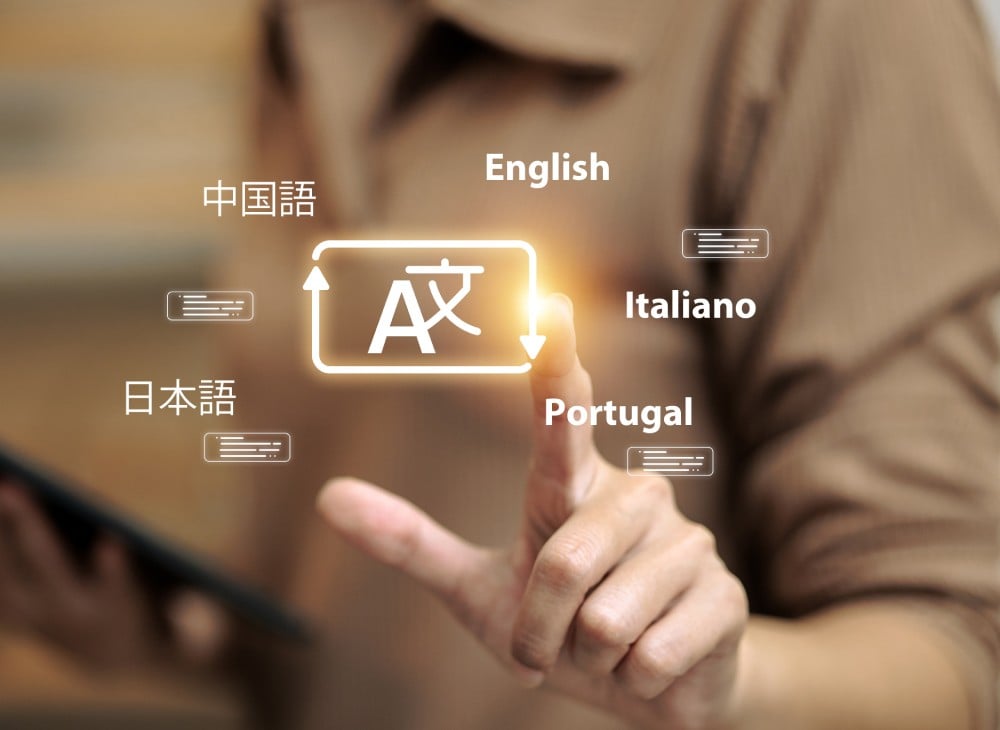
Capital Linguists prepare layouts for right-to-left languages such as Arabic and Hebrew, Chinese, Japanese, and Korean, often grouped under double-byte character languages, and Latin-script European languages such as French, German, Spanish, and Italian.
Right-To-Left Language Layouts
Arabic and Hebrew documents read from right to left, so the page structure may need more than a text swap. Paragraphs move to the right, bullets and numbering shift position, and some publications require reversed page order or binding direction.
Brand names, product codes, dates, URLs, and numbers often remain left to right, which creates mixed-direction lines that need close review. For files that also need Arabic translation, Capital Linguists can manage the language work and final page layout within the same project.
CJK And Double-Byte Character Support
Diacritics, Bidirectional Text, and Special Characters
Unicode-based character encoding helps accented letters, symbols, and non-Latin characters appear as intended across source files and final outputs. Mixed-direction content, such as Arabic text containing English brand names, URLs, dates, or product codes, requires careful control of reading order, punctuation, and spacing.
For digital files, our website and software localization can pair language adaptation with checks for text direction and character rendering across screens.
Need to discuss your requirements?Talk to us.
We are here to provide you with impeccable translation and interpreting services and support.
We Have Linguists Who Know Your Field
For design and layout work, the team uses Adobe InDesign, Illustrator, Photoshop, FrameMaker, QuarkXPress, and CorelDRAW. IDML, INDD, and MIF are among the accepted file formats. Legacy PageMaker files require a compatibility review. Office and e-learning projects can use PowerPoint, Word, Excel, Articulate, Captivate, MadCap Flare, and Lectora.
| Source Files | Delivery Format |
|---|---|
| INDD, IDML, AI, PSD, MIF, QXP | PDF, EPS, TIFF, JPG |
| DOCX, PPTX, XLSX | Editable Office files and PDFs |
| Articulate, Captivate, Flare, Lectora files | Agreed digital output |
| SGML and XML | SGML, XML, or agreed final format |
Our Multilingual DTP Process
File Review and Project Setup
A project manager checks the source files, target languages, page count, file condition, final output, and delivery date before production begins.
Translation and Layout Preparation
Desktop Publishing
Language Review and Print-Ready Check

Quality Assurance and Review
Every formatted document goes through a native-speaker layout review and a final preflight check before delivery. The linguist checks how the translated text reads within the finished pages, while the DTP team checks the file for print and digital use. The aim is clear: catch formatting errors that can weaken your brand before the document reaches print or publication.
Checks include:
- Font embedding
- Image resolution
- Text overflow
- Color separation for print
- Correct reading direction
Documents and Content We Format
Capital Linguists formats translated files for print, digital use, training, and regulated business communication. Brochures, flyers, and advertisements need balanced text, clear image placement, and enough room for language expansion. Packaging and labels have tight space limits, so font size, line breaks, symbols, and required product text must remain readable.
Technical manuals need consistent styles across diagrams, tables, warnings, and callout boxes. Files prepared through our legal translation need stable page numbering, headings, references, and document structure across each language version. E-learning materials require properly placed text in slides, buttons, captions, and on-screen graphics so learners can read and use each module without layout errors.


Choosing a Multilingual DTP Provider
Capital Linguists supports more than 200 languages and has ISO 9001 and ISO 17100 certification for its translation-service processes, backed by linguistic review and production checks for each formatted document.
How To Work With Us
1
Send Your Request
2
Get Your Quote
3
Receive Your Translation
Your Language Is on Our List
Get A Quote For Your Multilingual DTP Project
Philadelphia, New York, and across the United States. Send your source files, target languages, output format, and deadline to info@capitallinguists.com, or call 612-817-7744.
Frequently Asked Questions
What is multilingual desktop publishing, and how does it work?
How is desktop publishing different from translation?
Can you work with right-to-left languages like Arabic and Hebrew?
Yes. Capital Linguists formats Arabic and Hebrew files by adjusting paragraph alignment, bullets, numbering, page flow, and mixed-direction text such as brand names, dates, and product codes. A language reviewer checks the reading order and character display before delivery.
Which source file formats do you accept?
Capital Linguists accepts INDD, IDML, AI, PSD, MIF, QXP, DOCX, PPTX, XLSX, SGML, and XML files, plus files from Articulate, Captivate, MadCap Flare, and Lectora. Native source files are preferred because they keep text, images, and page elements editable.
How do you handle text that expands when translated into German?
German text can take up more space than the source language. A DTP specialist resizes text boxes, changes spacing and font size where needed, and moves nearby design elements so the full translation fits without clipped text or crowded pages.
How long does a multilingual DTP project take?
What file formats do you deliver as final output?
Capital Linguists can return print-ready PDF, EPS, TIFF, JPG, PostScript, SGML, XML, and editable native files. Final formats are set by your publishing, printing, or digital-use requirements.
Why do I need DTP instead of just hiring translators?
NEED TO DISCUSS YOUR REQUIREMENTS?
Provide us with a few details and our project management team will contact you with a customized solution.
Most quotes returned within 2 hours.
All data handled under strict NDAs.
Note: If you provide a phone number, someone may try to reach you by SMS. Reply “stop” to prevent further texts at any point. We will never sell or give your details to any third parties.
Contact Us
"*" indicates required fields
