
In Latvian, a name like George Cole is written Džordžs Kols. That is no typo. It is one of many surprises in a language most English speakers know very little about.
Latvian is a Baltic language and the official language of Latvia, spoken natively by about 1.5 million people. It is one of only two Baltic languages still spoken today.
The Latvian language facts below cover its roots, its alphabet, its grammar, and the old records that shaped it. Along the way, you will see why Latvian can be tricky to translate into English.
Latvian Language Facts You Probably Didn’t Know
From its rare Baltic roots to a wooden cabinet holding more than 200,000 folk songs, Latvian has plenty of surprises. Here are ten facts that show what makes this small language so distinctive.
1. Latvian Is One of Only Two Living Baltic Languages
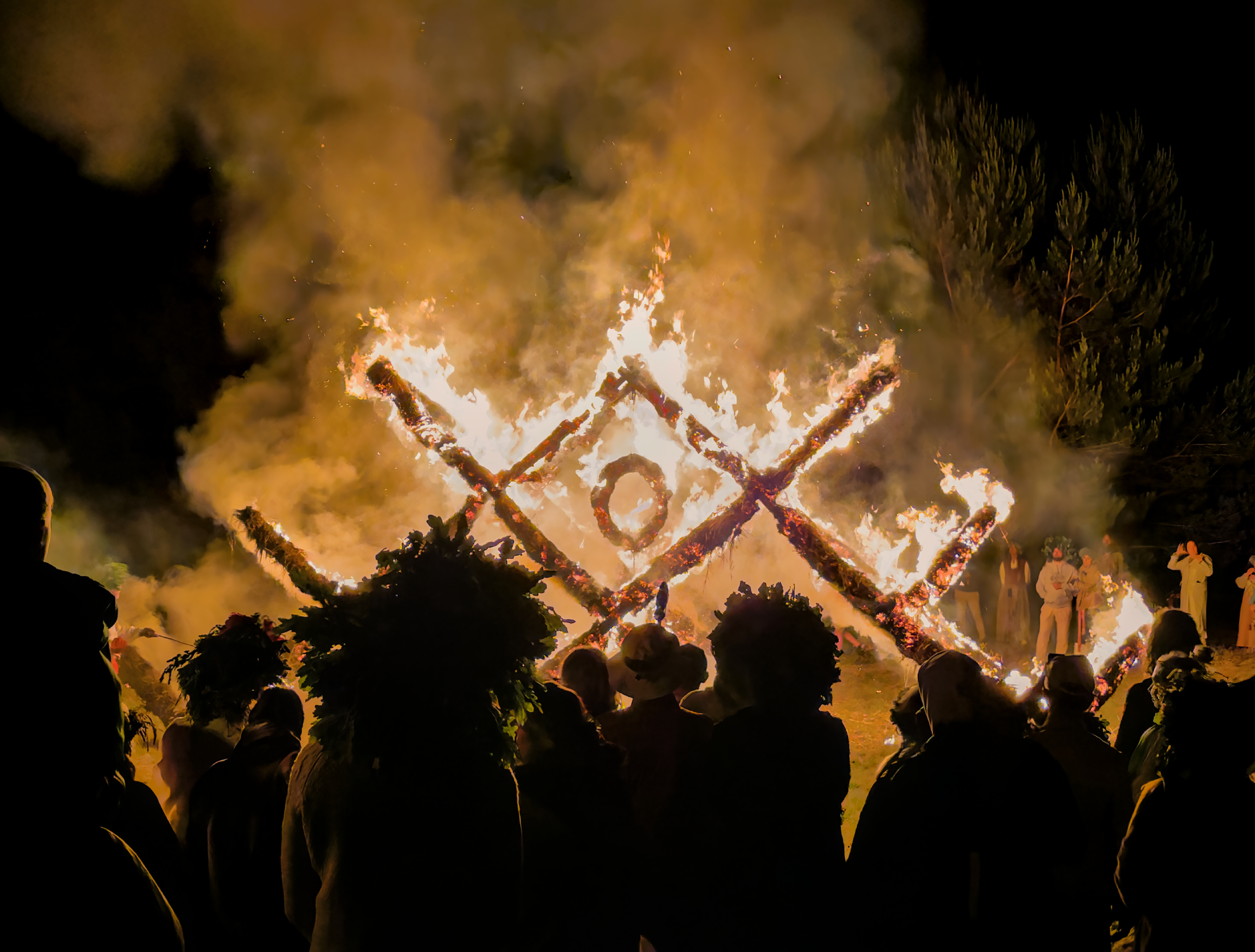
Latvian belongs to the Baltic branch of the Indo-European language family. Only two members of that branch survive today, Latvian and Lithuanian. Others, such as Old Prussian, Curonian, and Semigallian, have died out, according to Britannica.
That makes Latvian a rare survivor. It is not a Slavic language like Russian, and it is not a Germanic language like German, even though it has borrowed words from both.
Latvian and Lithuanian are close relatives, yet a speaker of one cannot simply understand the other. A UK government factfile on Latvia notes that the two are not mutually intelligible. Britannica adds that Latvian has changed more than Lithuanian over the centuries.
2. About 1.5 Million People Speak Latvian as a First Language
At least 1.5 million people around the world speak Latvian natively, according to Latvia’s Ministry of Education and Science. That places it at roughly 150th among the more than 6,000 languages spoken today.
A small speaker base has not weakened its legal standing. Section 4 of Latvia’s Constitution names Latvian as the state language. When Latvia joined the European Union in 2004, Latvian also became an official EU language.
The language travels, too. Well over 100,000 Latvian speakers live outside the country. The Latvian Language Agency supports more than 100 weekend and summer schools for diaspora families in 29 countries.
3. The Alphabet Has 33 Letters but No Q, W, X, or Y
The Latvian alphabet uses 22 standard Latin letters plus 11 letters with diacritics: Ā, Č, Ē, Ģ, Ī, Ķ, Ļ, Ņ, Š, Ū, and Ž. The letters Q, W, X, and Y are not part of it, as a UK government factfile on Latvia confirms.
Those small marks matter. A line above a vowel, called a macron, makes the vowel long. It can also change the word completely. Kazas means goats, while kāzas means a wedding.
The good news for learners is that Latvian spelling is phonetic. Once you know the letters, you can read most words aloud correctly on the first try.
4. Stress Almost Always Falls on the First Syllable
In Latvian, the stress lands on the first syllable of almost every word, as Britannica notes. English speakers, who deal with stress that moves around (think photographer and phoTOgrapher), usually find this rule easy to follow.
Where did it come from? Linguists link it to centuries of contact with Finnic neighbors, especially the Livonians who lived along the Latvian coast.
That contact left more than a speech pattern. Latvian absorbed roughly 500 to 600 words from Finnic languages. Everyday words such as māja (house) and puika (boy) came from this source.
5. There Is No Word for “A” or “The”
Latvian has no articles at all. Instead, the ending of an adjective signals if the speaker means one specific thing or any thing of that kind.
Endings do a lot of work in Latvian. Nouns have two genders, masculine and feminine, and seven cases. Each case changes the ending to show the word’s role in the sentence, such as subject, object, or place.
Because the endings carry so much meaning, word order is more flexible than in English. Latvian even has a special verb form for obligation. The prefix jā– turns a verb into a duty, so man ir jāmācās means “I must study.”
6. Foreign Names Are Rewritten the Way They Sound
Latvian does not keep foreign names in their original spelling. A name is spelled with Latvian letters to match how it sounds, and then it gets a Latvian ending.
The results can surprise English speakers. Shania Twain becomes Šenija Tveina. Gérard Depardieu becomes Žerārs Ksavjē Marsels Depardjē, with every part of his full name respelled.
Santa Logina, chief linguist at the Latvian Language Agency, told Latvian public media that names are rendered “using the letters of the Latvian alphabet” to stay close to the original pronunciation. There is a practical reason too. Latvian nouns change their endings from case to case, so a name needs a Latvian ending to work inside a sentence.
7. Surnames Change Depending on Gender
In Latvia, men and women in the same family often carry different forms of one surname. A man might be Pētersons, while his wife or daughter is Pētersone, as the same LSM report explains. Surnames simply follow the same masculine and feminine patterns as other nouns.
The system works well inside Latvia. Abroad, it can cause real problems. One woman profiled by LSM ended up with three versions of her married surname, and her daughter’s birth certificate and passport did not match.
Latvians living in other countries report trouble opening bank accounts, delays at airports, and difficulty proving they are related to their own children. For anyone handling Latvian documents, consistent name spelling is not a small detail.
8. Early Latvian Books Were Printed in Gothic Script
The oldest surviving Latvian book is a Catholic catechism from 1585. The earliest Latvian texts were religious, and they were printed in Gothic script, according to Britannica.
For centuries, Latvian was spelled using German conventions. Johann Ernst Glück later translated the Bible into Latvian, with the New Testament published in 1685 and the Old Testament in 1691.
The modern alphabet came much later. Linguists Kārlis Mīlenbahs and Jānis Endzelīns developed it in 1908, and a modified Latin alphabet was officially adopted in 1922. Even under Soviet rule, Latvian kept the Latin alphabet and was never moved to Cyrillic, as the same UK factfile points out.
9. One Wooden Cabinet Holds Over 200,000 Folk Songs
Latvian folk songs, called dainas, are short. Most are just four lines long. Together, though, they fill one of Latvia’s most treasured national archives.
In the second half of the 1800s, thousands of people sent song texts to the folklorist Krišjānis Barons. Each song was kept on its own small paper slip and stored in a wooden cabinet built in 1880, with 70 drawers. Barons counted 217,996 song texts and published them in eight volumes between 1894 and 1915, according to the UNESCO nomination file.
UNESCO added the Cabinet of Folksongs to its Memory of the World Register in 2001. Today it is kept at the National Library of Latvia. The UNESCO file describes the collection as a foundation of Latvian national identity.
10. Latvia Protects Two Other Language Traditions
Standard Latvian is not the only language tradition in the country. In eastern Latvia, many people use Latgalian. Latvia’s Official Language Law protects the Latgalian written language as a historic variant of Latvian, according to the Ministry of Education and Science. Some linguists still debate if it should count as a separate language.
Then there is Livonian, also called Liv. It is a Finnic language related to Estonian and Finnish, not to Latvian. Its last native speaker, Grizelda Kristiņa, died in 2013. A small group of learners and researchers keeps it in use today.
The Latvian state still supports Livonian as the language of the country’s indigenous people. In 2018, Livonian language and culture joined Latvia’s national list of intangible cultural heritage.
What These Facts Mean for Latvian Translation and Interpreting
Latvian’s spelling, grammar, and naming rules can create challenges for both written translation and spoken interpreting. These differences require careful attention, especially when handling legal documents, immigration records, medical appointments, and official communications.
- Names require special attention. Gendered surnames and adapted foreign names can appear differently across Latvian and US documents. Professional translators check names against official records and identify spelling variations to prevent confusion.
- Diacritics can change meaning. Missing a macron or another diacritic can alter a word’s meaning. Translators must preserve these marks accurately, particularly in legal and official documents.
- Grammar affects accuracy. Latvian has seven cases, no articles, and flexible word order. Translators must understand these differences to preserve the intended meaning rather than translate word for word.
- Historical records need specialized knowledge. Older documents may contain German-influenced spelling or Latgalian. Translating these records requires familiarity with historical language forms, especially for genealogy, inheritance, and property matters.
- Spoken interpreting presents additional challenges. During court hearings, medical appointments, and business meetings, Latvian interpreters must convey names, technical terms, and intended meanings accurately in real time.
Conclusion
Latvian has relatively few speakers, but it carries a long history and distinct rules for spelling, grammar, and names. These features can make translation challenging, especially when accuracy matters for official documents, legal proceedings, and live interpretation.
Get Certified Latvian Translation and Interpreting With Capital Linguists
At Capital Linguists, our experienced Latvian translators handle immigration records, court filings, contracts, and family archives. For hearings, depositions, medical appointments, and business meetings, our Latvian interpreting services are available in person, by phone, or by video.
Share your document type, project requirements, and timeline. We’ll match you with the right Latvian linguist for your needs.

