
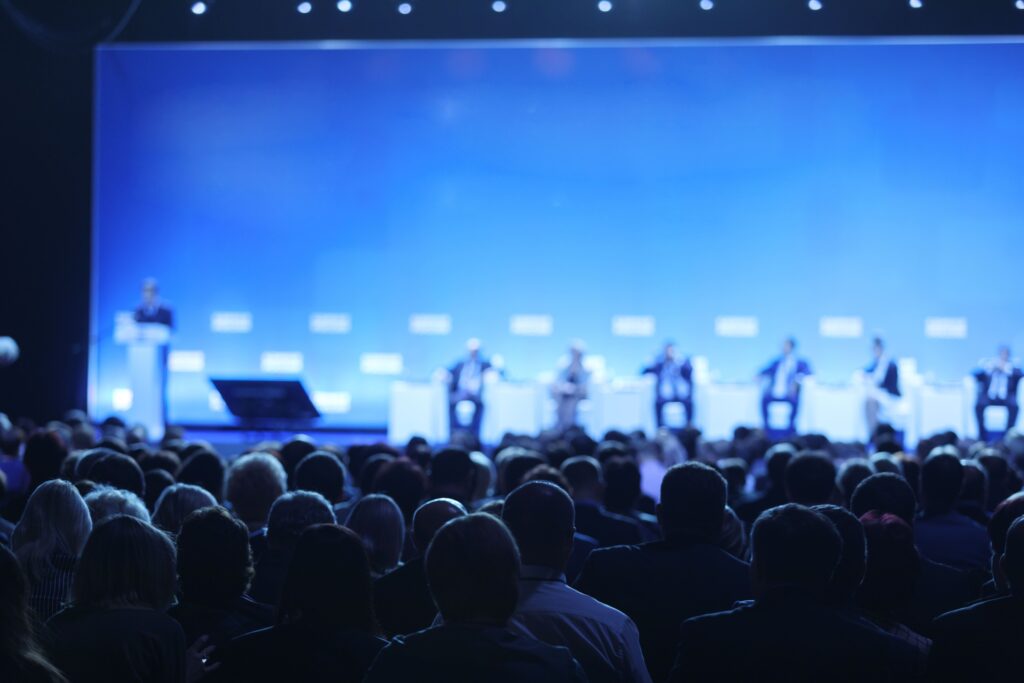
Conference interpretation is professional interpreting for conferences and large multilingual meetings, where speakers and participants need to communicate clearly across languages in real time. It can be delivered through different modes, including simultaneous interpreting and consecutive interpreting, depending on the format, audience size, and time constraints.
If you’ve ever watched a global conference and wondered how everyone understands in real time, this is the system behind it.
In this guide, you will learn what conference interpretation includes, how it works during a live event, and how to choose the right mode for your sessions. You will also learn the equipment and setup options for on-site, hybrid, and remote events, plus the planning steps that protect quality, reduce risk, and keep your audience engaged from start to finish.
What is Conference Interpretation?
Conference interpretation is a specialized interpreting service used in formal events where people speak different languages and still need to communicate with speed and accuracy. It supports structured speaking formats, complex topics, and high-visibility settings where the message must stay clear for every audience group.
Conference interpretation is common in large business conferences, shareholder meetings, and corporate town halls where leaders present complex updates to multilingual teams.
It is also used in product launches, press briefings, and media events where timing and messaging must stay consistent across languages.
You also see conference interpretation in government and diplomatic meetings, international summits, and policy forums where accuracy matters and discussions move quickly.
Academic conferences and medical or scientific congresses use it when speakers present research, data, and technical terms to international attendees.
Industry trade shows and professional training conferences use conference interpretation for keynote sessions, panels, and workshops when organizers want all attendees to follow the content without delays.
Nonprofit, NGO, and humanitarian conferences use it when cross-border coordination requires clear decisions and shared understanding.
The Main Types of Conference Interpretation
Multiple interpretation types are usually included under the umbrella of conference interpretation. The right choice depends on audience size, agenda timing, and how much you can pause the speaker without breaking the session.
1. Simultaneous Interpreting
Simultaneous interpreting is often used in conference interpretation, but it is not the same thing. It is real-time interpreting delivered while the speaker continues talking, usually with only a short delay. It is the best fit for plenaries, keynotes, panels, and any session where you need the speaker to keep momentum and the audience to stay fully engaged.
Example
A familiar private-sector example is a global company running a live town hall for employees across multiple regions. The CEO delivers updates and answers questions in real time, and conference simultaneous interpreting lets teams in different countries follow the message through language channels without slowing down the session. This is the kind of multi-speaker, time-sensitive setting where simultaneous interpreting works best.
2. Consecutive Interpreting
Consecutive interpreting is a common conference interpretation mode used when a session allows pauses for clarity. The speaker stops every few sentences, and the interpreter listens, takes notes, then delivers the message in the target language before the speaker continues.
It works best for smaller meetings inside a conference program, such as breakout sessions, stakeholder roundtables, Q&A segments, and side meetings where interaction matters and the pace can slow down without disrupting the overall schedule. It is often the better choice when the group needs precision, clarification, and back-and-forth discussion.
Example
A common example is a private bilateral meeting on the sidelines of a G7 Summit or G20 Summit, where leaders or delegations meet in a smaller room to negotiate details. In these settings, teams often use consecutive interpreting so each speaker can pause and the message can be delivered clearly before the discussion continues.
3. Whispered Interpreting for very Small Groups
In conference interpretation, whispered interpreting is a close-range option used when one or two attendees need support without a headset setup. The interpreter sits or stands nearby and delivers the message in a low voice while the speaker continues. It works for short, quiet moments when setting up equipment is not practical.
It works best for one or two listeners, for a short period of time, in a quiet room. You often see it inside conversations, short briefings, or small meetings inside a larger conference setting.
Example
In conference environments, whispered interpreting often comes up during formal receptions and state-dinner style events, including high-profile diplomatic gatherings tied to the White House. These settings involve short side conversations in a crowded room, with no headsets or language channels. An interpreter may stand close and whisper to support one or two listeners for a brief exchange.
4. Liaison Interpreting
Liaison interpreting is commonly used in conference interpreting used for short, two-way conversations between a small number of people. The interpreter stands nearby and relays what each person says so both sides can respond clearly. It is usually delivered in short segments, which keeps the exchange accurate and controlled.
In conferences, liaison interpreting is useful when the conversation happens outside the main program. Think hallway discussions, reception lines, and informal networking moments where people need quick clarity without a booth, headsets, or a dedicated language channel. It helps leaders, delegates, and executives move fast, build rapport, and avoid misunderstandings in high-pressure settings.
Example
You may have seen it during high-profile diplomacy at major summits, where two leaders speak briefly in a busy corridor while an interpreter supports the exchange. That is a typical liaison interpreting scenario inside a conference environment.
A public example is Xi Jinping’s infamous exchange with Justin Trudeau at the G20 Summit in Bali in November 2022, where they argued through an interpreter in a busy corridor setting.
5. Relay Interpreting
Relay interpreting is used when there is no direct interpreter available between two languages in the room. The interpreter first listens to a “pivot” language (often English or French), then interprets from that pivot into the target language for the audience. It is a practical workaround when many languages are in play and staffing every language pair is not possible.
In conference settings, relay interpreting helps organizers cover more languages without delaying the program. It is common in large multilingual meetings where multiple language booths operate at the same time and some language pairs are rare.
Example
In large European Parliament debates with many official languages, relay can be used when a direct language pair is not available. A speech may be interpreted into a pivot language first, then other booths work from that channel.
6. Retour Interpreting
Retour interpreting is when an interpreter interprets into a non-native language, often called a B language. It is used when the conference needs coverage into a widely understood language, and the most qualified interpreter for the subject matter is stronger working from their native language into that shared language.
In conferences, retour is useful when you have speakers from many countries and you need a reliable shared channel for the room. It can also help when a conference has limited interpreter availability for certain language combinations but still needs consistent delivery.
Example
In multilingual European Union meetings, interpreters may provide retour into a common working language so other language teams and delegates can follow the discussion without waiting for a perfect language-pair match.
7. Sight Translation
Sight translation is when an interpreter reads a written text and delivers it orally in another language on the spot. It is not a prepared written translation. It is a live oral rendering of a document, done quickly and clearly so the room can move forward.
In conferences, sight translation is useful when a speaker brings a last-minute statement, a draft agenda change, a short press note, or a written resolution that needs to be understood immediately. It is often used for short texts because it demands fast reading, fast processing, and clean delivery.
Example
During a conference session, a chair may receive a new written motion right before it is discussed. The interpreter may sight translate the key lines so delegates can react in the moment and the meeting can continue without a long pause.
How Conference Interpretation Works in a Live Event
Conference interpretation can use different modes in the different programs, so the workflow changes by session.
Still, the overall flow is predictable.
Once you understand the chain from speaker to listener, you can plan the event with fewer surprises and better results.
In a plenary session
The format is built for scale. Interpreters work in simultaneous mode, and attendees listen through headsets or a platform language channel.
The speaker keeps a normal pace, and the audience hears the interpretation with a short delay.
In smaller meetings
The room is interactive, so consecutive or liaison interpreting is common.
Speakers pause in short segments, and the interpreter delivers each message before the discussion continues. This supports clarification and back-and-forth without confusion.
In a live conference interview
Interpreting must match the rhythm of questions and answers. The interpreter may work consecutively for a clean exchange, or simultaneously if the setup supports it.
The goal is a natural conversation that still stays accurate.
What Equipment and Setup You Need For Conference Interpretation
Good audio in a conference starts with the right equipment. If the interpreter can’t hear a clean sound feed, accuracy drops fast.
-
On-site setups
On-site conference interpreting usually relies on a booth, an interpreter console, and a clean microphone feed from the room.
Attendees use receivers and headsets to select a language channel and follow the session without stopping the speaker.
-
Portable options for small rooms
For smaller spaces, a portable system (bidule) gives the interpreter a mic and gives listeners receivers with headsets, which keeps the session moving without a full booth.
Whispered interpreting works best for one or two listeners, for a short duration, in a quiet room, because it has no equipment and can distract others nearby.
| A simple decision rule helps.
If more than two people need the language, or the room is not quiet, use a portable headset system. If it is one or two people for a short exchange, whispering can work. |
-
Remote simultaneous interpreting (RSI) and hybrid events
Remote simultaneous interpreting delivers the language channels through an online platform, so attendees listen on their device instead of a physical receiver. The interpreter needs a quality headset and microphone, a stable internet connection, and a quiet space to work.
What can go wrong is usually technical.
Weak connectivity causes dropouts, platform limits can restrict language channels, and poor source audio makes accuracy harder.
| The fix is planning
Run a rehearsal, assign live tech support, and keep a backup plan for audio and connectivity. |
Planning Checklist for Organisers
1. Before you book
- Confirm the languages you need and which sessions require coverage.
- Estimate audience size for each language so you choose the right setup.
- Define the event format for each session, such as plenary, panel, breakout, workshop, or interview.
- Lock the session length and pacing so staffing matches the real workload.
- Rate content complexity, including technical terminology, data-heavy slides, and sensitive topics.
- Confirm accessibility needs, such as captions, CART, or sign language interpreting if required.
2. What to send interpreters in advance
- The full agenda with session times and speaker order.
- The latest slide deck and any scripts or talking points.
- A speaker list with names, titles, and pronunciation notes.
- A list of acronyms, product names, and internal terms.
- Any past recordings of similar sessions if available.
- A glossary or key terms list, even if it is informal.
3. Tech rehearsal essentials
- Test the full audio chain from speaker mic to interpreter feed to audience channel.
- Confirm language channels and how attendees select them.
- Rehearse handoffs between interpreters or between sessions.
- Set a clear backup plan for internet, microphones, and platform failures.
- Assign who owns live support and who makes decisions if something breaks.
Work With Capital Linguists for Conference Interpretation
1. Interpretation Services in over 200 Languages
We provide conference interpretation services in over 200 languages, with the staffing and coordination needed to support multilingual audiences. Our process keeps each language stream consistent, so your event stays aligned from the first keynote to the final Q&A.
2. Certified Interpreter Teams with Real Conference Experience
We assign certified interpreters who know how to perform under live pressure. Our teams handle fast speakers, technical terminology, and high-stakes sessions while keeping meaning accurate and delivery steady.
3. Equipment and Setup that Protects Clarity
At Capital Linguists, we treat audio and setup as the foundation of conference interpretation. We plan the right equipment for your format and make sure the interpreters receive a clean sound feed and your audience can access the correct language channels without confusion.
Share your event format, session duration, and required languages, and we will recommend the right mode, staffing plan, and setup for smooth delivery.
Capital Linguists provides complete conference interpretation services including equipment support as well.
Contact us now for conference event interpretation services.

