Capital Linguists
Luxembourgish Interpreting &
Translation Services
Live Interpreters
Available by phone, video, or in person
Live Interpreters
Document Translation
Translate documents, books, or websites
Document Translation
Luxembourgish Interpreting & Translation Services
If you need reliable Luxembourgish translators or interpreters, you’re in the right place. At Capital Linguists, our skilled team of Luxembourgish experts combines native-level mastery with real-world sector experience in medical, legal, and community settings.
We only work with accredited linguists who understand both the language and the context, and a minimum of five years’ professional experience to prove it. Plus, our ISO 9001 and ISO 17100 certifications mean quality and confidentiality are built into every project, whether that’s in Luxembourgish or any of the other 200+ languages we work with.
Get in touch at info@capitallinguists.com with the details of your project, or simply submit a quote request for assistance.
For prompt service, call (612) 817-7744, or email info@capitallinguists.com and we will contact you immediately.
Why Choose Capital Linguists? Our Promise to You…
Immediate Response
Our responsive customer service team can’t fail to impress. All questions are answered promptly and thoroughly. Every client has a dedicated Project Manager who will ensure a seamless experience from start to finish.
Great Value
Our clients come back time and time again, thanks to our combination of exceptional quality with affordability. We never compromise on accuracy, and you’ll be amazed at the excellent value for your investment.
Fast, Free Quote
Reach out when it’s convenient for you, and we’ll be happy to provide an immediate, free quote for all our Khmer interpreting and translation services.
Services We Offer
Interesting Facts About the
Luxembourgish Language
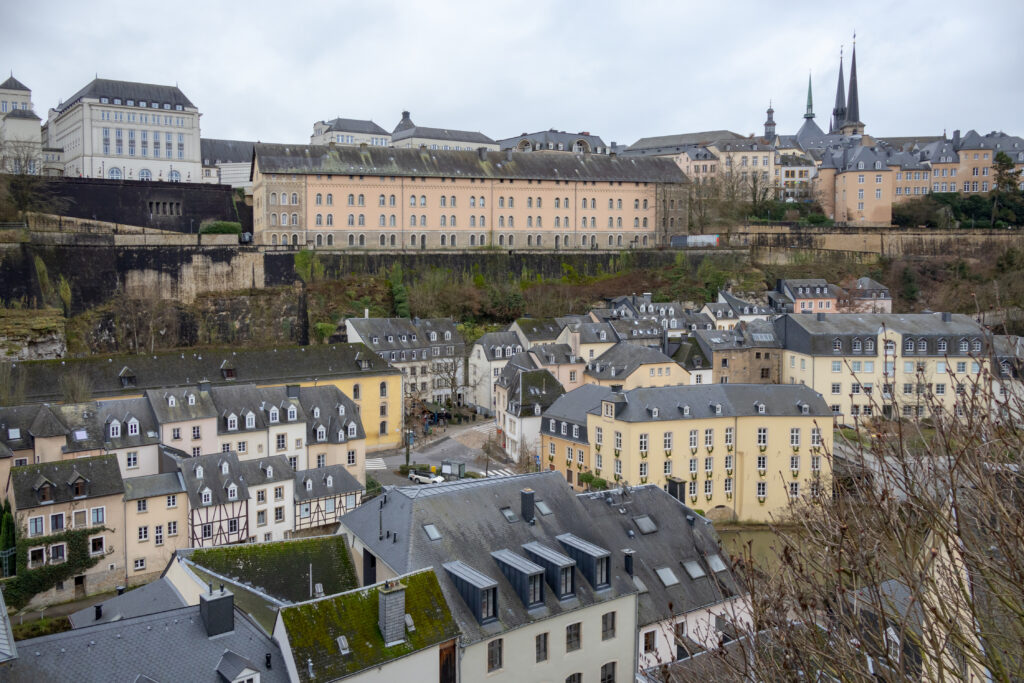
The Grand Duchy of Luxembourg, to use its official name (though most people simply call it Luxembourg), is a tiny landlocked state in the very center of western Europe, where it borders Belgium, France, and Germany. Its national language, Luxembourgish (Lëtzebuergesch), was the product of German dialects spoken along the Moselle River. There are just under 682,000 permanent residents, most of whom use Luxembourgish in some capacity, although true monolingual speakers are uncommon.
Five Interesting Facts about Luxembourgish:
- Luxembourgish did not become the national language until 1984. Other important milestones in its history also took place in recent decades. For instance, it wasn’t until the mid-20th century that there was a standardized spelling system. Until the adoption of the OLO, which stands for Ofiziell Lëtzebuerger Orthographie (“Official Luxembourgish Orthography”), Luxembourgish was mostly a spoken language, and people wrote in German or French.
- Luxembourgish is a West Germanic language, not Romance (like French). It developed from local (German) dialects spoken in the Moselle Valley and, unsurprisingly, is structurally much closer to German than French. Luxembourgish and German follow similar grammatical rules and even share some cognates.
- However, while many people see Luxembourgish as simply another German dialect, they’d be wrong. It actually has many unique words and idioms, as well as its very own syntax that can leave German speakers confused.
- Perhaps unsurprising, given its location at the crossroads of Europe, Luxembourg is very multilingual, particularly its capital, Luxembourg City. Many of its residents are foreign nationals, and a lot of the people who work in the city actually commute there from neighboring France and Belgium. However, you don’t have to travel far out of the capital to meet locals who use Luxembourgish every day. In these more rural areas, the language is a key part of locals’ cultural identity.
- Despite its name, Luxembourgish is not just spoken within the confines of the country itself. You’ll also hear it in the nearby Moselle region, along the course of the famous river itself, which begins in eastern France and flows through Luxembourg, into western Germany.
NEED TO DISCUSS
YOUR REQUIREMENTS?
"*" indicates required fields
